 Jon-Paul Cacioli is a Doctor of Clinical Psychology student at Deakin University, and he’s currently conducting a study on body image in virtual worlds. In his words:
“I am looking for participants, male and 18+ to complete a survey regarding both their real world and virtual world body images and psychological states.”
He needs 300 or so participants to take the survey. It’s a fairly intensive process, which takes around 15-20 minutes. If you have that time to give, then go make a contribution toward the increased understanding of how we perceive ourselves in the virtual and real worlds.


 (This story appeared earlier today over at
  Kali: Constructivism and social constructivism are the key learning theories in my work. By linking history and heart and lung sounds to other parts of a clinical scenario, I am building on the students previous knowledge to create new knowledge. People in simulations tend to act the same as they do in real life. The ability to capture the text allows for reflection on the decision-making of this particular group.
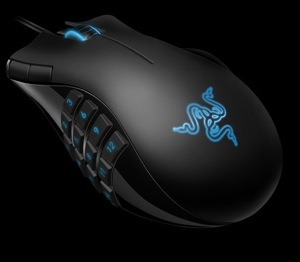 Over the past few days a product announcement and some interesting research have come together for me in illustrating some of the downsides of heavy regular use of virtual environments. I’m talking specifically about the physical impacts here: we’ve covered the psychological positives and negatives repeatedly (e.g.
  In 2008, with not a lot of fanfare, the
  Born in Kwangju, Korea, and Australian by naturalisation, Professor Young Choi was educated at the Australian National University and the University of Adelaide.
 Prof. Furness is a pioneer in human interface technology and virtual reality. He received the BS degree in Electrical Engineering from Duke University and the Ph.D. in Engineering and Applied Science from the University of Southampton, England. Dr. Furness is currently a professor of Industrial Engineering with adjunct professorships in Electrical Engineering, Mechanical Engineering, Aeronautics and Astronautics, and Human Centered Design and Engineering at the University of Washington. He is the founder of the Human Interface Technology Laboratory (HIT Lab) at UW and founder and international director of the HIT Lab NZ at the University of Canterbury, Christchurch, NZ and the HIT Lab Australia at the University of Tasmania, Launceston, Tasmania. He is also an Erskine Fellow and Adjunct Professor at the University of Canterbury and an Adjunct Professor at the University of Tasmania.
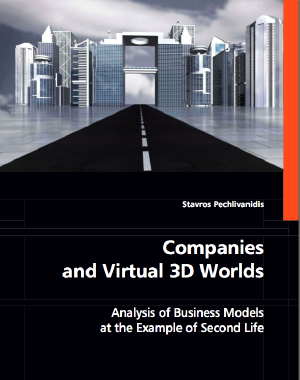 There’s an ever-growing pile of books on virtual worlds available, ranging from tour guides to


Recent Discussion